Cooking With Your Kids Before Kindergarten: Five Kitchen Activities That Build Math, Language, and Independence
By Lisa Chaplinsky, M.S., Town & Country Early Learning Centers
The school supply lists start showing up in inboxes in August. The Facebook groups fill up with questions about which backpack holds a lunchbox and whether a child should know how to write their name by now. The anxiety that has been quietly building since spring gets loud.
I understand it. Kindergarten feels like a threshold, and Connecticut parents want to know their child is ready to cross it with confidence. After nearly 30 years of watching children leave our [K-Readiness classrooms](link to K-Readiness program page) at our daycare in Middletown, CT, Southington, and Colchester and walk into their first day of elementary school, I want to share what we actually focus on in August and what you can do at home this weekend to support it.
The answer might be right in front of you, in your kitchen.
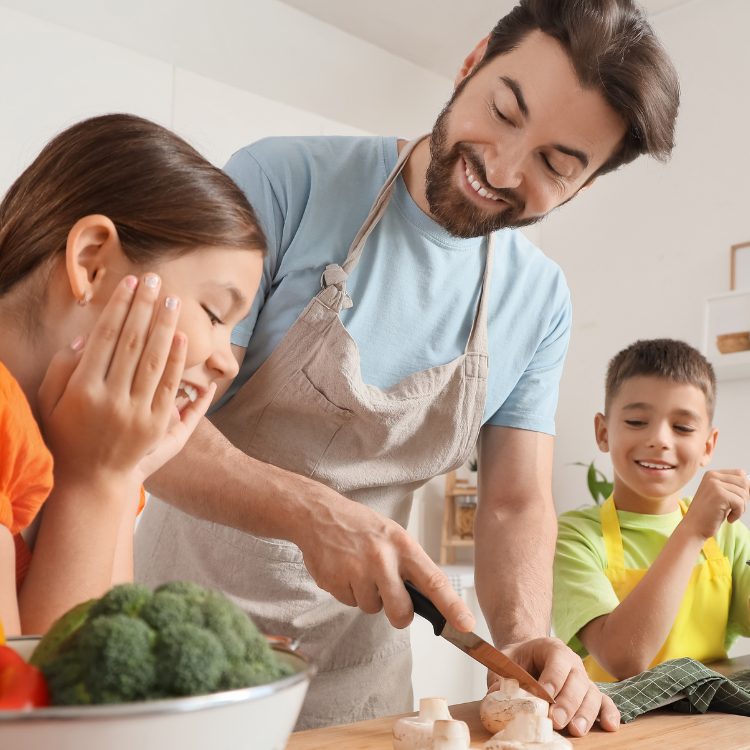
At Town & Country’s quality childcare Connecticut and preschool centers in Middletown, Southington, and Colchester, our Here We Thrive® nutrition program has been cooking with children for years, not because cooking is a life skill, though it is, but because the kitchen is one of the richest learning environments a young child can be in. Measuring builds math. Following a recipe builds executive function. Pouring and stirring builds the fine motor precision that kindergarten teachers rank among their most-wanted readiness skills. And doing all of it alongside a parent builds the kind of secure attachment that researchers say underpins every other area of development.
Here are five kitchen activities we use in our program, each one simple enough for a Sunday afternoon and each one doing more developmental work than it looks like.
“The kitchen is one of the most underused classrooms in a young child’s life. Everything in it teaches something, and none of it requires a lesson plan.”
Why Cooking With Preschoolers Supports School readiness Connecticut
Before the recipes, the research. A 2012 study published in the Journal of Nutrition Education and Behavior found that children who participated in hands-on food preparation activities showed significantly stronger outcomes in nutrition knowledge, food acceptance, and fine motor development than children who did not. (Cunningham-Sabo and Lohse, 2012.)
More broadly, cooking maps directly onto the skills Connecticut kindergarten frameworks identify as foundational. Measuring and counting build early numeracy. Reading and following a recipe build print awareness and sequential thinking. Waiting for something to bake builds impulse control and patience. Describing what something smells or tastes like builds the expressive vocabulary that the National Early Literacy Panel identifies as one of the six strongest predictors of reading success. (National Early Literacy Panel, 2008.)
None of this requires a complicated recipe or a clean kitchen. It requires a child, an adult who is willing to go slowly, and about twenty minutes.
Kitchen Activity 1:
Fruit Salad and the Sorting Game
- What you need: Three or four kinds of fruit, a cutting board, a plastic knife safe for children, a large bowl, and a smaller bowl for each type of fruit.
- What you do: Wash the fruit together first, naming each one and talking about where it grows. Then let your child sort the fruit by type into small bowls before combining it all in the large bowl. For older children, introduce a simple pattern: two strawberries, one blueberry, two strawberries, one blueberry, and ask them to continue it.
- What it builds: Sorting and classification, which are foundational math skills in CT Childcare regulations and the Early Learning and Development Standards. Patterning, which is one of the earliest algebraic thinking skills. Fine motor control from handling small pieces of fruit. And vocabulary from naming colors, textures, and tastes throughout.
One tip: Ask your child to predict which bowl will have the most fruit before you start. Then count together at the end and see if they were right. That single exchange, predict, count, compare, is a complete early math lesson.
A Middletown parent described this kind of daily, detail-rich engagement in her review, writing that she was “always aware of the curriculum being taught and loved seeing the fun ways in which our children are learning.” That awareness, knowing what your child is building and why, is exactly what makes the difference between an activity and an experience.
“A child who sorts strawberries from blueberries and counts each pile is doing math. They just don’t know that yet. That’s exactly the point.”
Kitchen Activity 2:
Measuring and Mixing Simple Muffins
- What you need: A basic muffin mix, the ingredients listed on the box, measuring cups and spoons, a mixing bowl, and a muffin tin.
- What you do: Let your child do as much of the measuring as possible. Show them how to level off a cup of flour with a flat edge. Let them pour. Let them stir. Let them count the muffin cups as they fill them. When the muffins come out of the oven, talk about what changed from the batter to the finished product and why.
- What it builds: Early measurement and numeracy from reading and using measuring tools. Executive function from following a multi-step process in the correct sequence. Scientific thinking from observing how heat transforms raw ingredients. Fine motor strength from stirring a thick batter. And the deep satisfaction of making something real, which builds the persistence and confidence that carry a child through the harder moments of a kindergarten day.
Our Here We Thrive® program, developed in partnership with a registered dietitian, uses cooking activities exactly like this one across all three of our centers in Middletown, Southington, and Colchester because we know that children who understand where food comes from and how it is made approach eating, learning, and problem-solving differently.
Kitchen Activity 3:
Sandwich Assembly and Sequencing
- What you need: Bread, two or three simple fillings of your child’s choice, a plate, and a plastic knife for spreading.
- What you do: Before you start, talk through the steps together. “First we choose our bread. Then we spread. Then we add our fillings. Then we put the top on.” Let your child lead each step. After the sandwich is made, ask them to tell you what they did, in order, from beginning to end.
- What it builds: Sequential thinking and the ability to follow multi-step directions, which kindergarten teachers consistently identify as one of the skills they most want children to arrive with. Expressive language from narrating the process. Fine motor precision from spreading. And self-efficacy from making something they will actually eat for lunch.
The retelling step is not optional. It is the whole point. A child who can describe a four-step process in the correct sequence is practicing the same cognitive skill they will use to follow classroom instructions, recall a story, and explain their thinking to a teacher. (Diamond, 2013, “Executive Functions,” Annual Review of Psychology.)
One Colchester parent wrote that from the moment she enrolled, she noticed “so much growth in our child, especially in using his words and learning new skills.” The sandwich retelling is a two-minute version of exactly that work, available every day at lunchtime.
Kitchen Activity 4:
Frozen Yogurt Bark With Toppings
- What you need: Plain or vanilla yogurt, a sheet pan lined with parchment paper, and whatever toppings your child chooses. Berries, granola, sliced banana, mini chocolate chips, coconut flakes.
- What you do: Spread the yogurt onto the parchment paper together, about a quarter inch thick. Then let your child arrange the toppings however they like before putting the pan in the freezer for two to three hours. When it comes out, break it into pieces and eat it together.
- What it builds: Creative expression and spatial reasoning from arranging toppings on a surface. Fine motor control from placing small items precisely. The concept of change over time, which is foundational to scientific thinking, from observing liquid yogurt become solid bark. And a conversation about healthy eating that doesn’t feel like a lesson because it isn’t one.
This is one of our Here We Thrive® warm-weather favorites because it works across a wide age range. A two-year-old places toppings freely and calls it done. A five-year-old in our preschool programs in CT might decide to make a pattern with the berries, explain it to you, and then check whether the finished bark matches their plan. That gap between intention and execution, and the thinking it takes to close it, is executive function in action.
“Cooking together is not a break from kindergarten preparation. For a four-year-old, it might be the most important thing you do all August.”
Kitchen Activity 5:
Homemade Pizza and the Talking Recipe
- What you need: Store-bought pizza dough or English muffins, tomato sauce, shredded mozzarella, and toppings of your child’s choice.
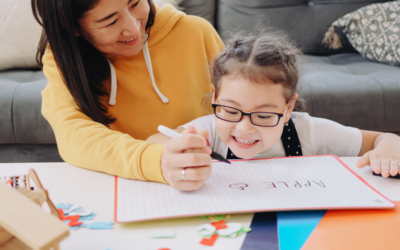
- What you do: Before you start, write the steps on a piece of paper together, with your child dictating and you writing. “First we spread the sauce. Then we add the cheese. Then we put on the toppings. Then we cook it.” Read the recipe back together before you begin, pointing to each word as you read it. Then follow the steps, checking each one off as you go.
- What it builds: Print awareness from watching words being written and then reading them back. The understanding that spoken words can be written down and read again, which is one of the most foundational concepts in early literacy. Sequencing and planning. And the particular pride of following a recipe your child authored themselves.
The National Early Literacy Panel identifies this kind of shared writing experience, where a child dictates and an adult transcribes, as one of the highest-value early literacy activities available to parents at home. It requires no special materials and no teaching background. It requires a pen, a piece of paper, and five minutes before you start cooking. (National Early Literacy Panel, 2008.)
How Our Here We Thrive® Nutrition Program Connects Home and Center for Connecticut Families
What makes these activities more than just a fun afternoon is the thread that runs through all of them: a child who is doing something real, alongside an adult who is paying attention, is learning at a depth that structured instruction cannot match at this age.
At Town & Country, our Here We Thrive® program is built on exactly this principle. Every meal and snack at our Middletown, Southington, and Colchester centers is designed in collaboration with a registered dietitian, and the classroom activities around food, growing, preparing, and tasting, are tied directly to our [Building Blocks of Learning® curriculum](link to curriculum page) goals. When you do these activities at home, you are extending that same work into your family’s daily life, and your child arrives on Monday morning with a week’s worth of language, math, and independence built into a few Sunday afternoons.
That connection between home and center is one of the things we work hardest to build at Town & Country. It is why our teachers send daily updates through the Procare app, hold two parent-teacher conferences a year, and complete three developmental assessments per child annually. We want to know your child as well as you do, and we want you to know what we are working on so you can build on it at home.
Save this list. Bookmark this post or screenshot the five activities below for easy reference this weekend:
- Fruit Salad and the Sorting Game: three or four fruits, small bowls, a plastic knife.
- Measuring and Mixing Muffins: a basic muffin mix, measuring cups and spoons.
- Sandwich Assembly and Sequencing: bread, fillings, a plastic knife for spreading.
- Frozen Yogurt Bark: yogurt, parchment paper, toppings of their choice.
- Homemade Pizza and the Talking Recipe: pizza dough or English muffins, sauce, cheese, a pen and paper.
If you’re already part of the Town & Country family in Middletown, Southington, or Colchester, we’d love to hear which activity your child loved most. Tell your child’s teacher at drop-off and we’ll look for a way to bring it into the classroom.
If you’re a Connecticut parent researching [preschool and kindergarten readiness programs](link to K-Readiness program page) and want to see our Here We Thrive® nutrition program, our Building Blocks of Learning® curriculum, and our K-Readiness classrooms in person, we’d love to have you in. Call our Middletown center at 860.347.1400, Southington at 860.628.7900, or Colchester at 860.603.5055. We’re open Monday through Friday, 6:30 AM to 6:00 PM, year-round, and [scheduling a tour](link to tour scheduling page) takes about two minutes.
Sources: Cunningham-Sabo L and Lohse B. “Cooking with Kids Positively Affects Fourth Graders’ Vegetable Preferences and Attitudes and Self-Efficacy for Food and Cooking.” Journal of Nutrition Education and Behavior. 2012. / National Early Literacy Panel. “Developing Early Literacy: Report of the National Early Literacy Panel.” 2008. / Diamond A. “Executive Functions.” Annual Review of Psychology. 2013. / NAEYC accreditation CT. “Developmentally Appropriate Practice in Early Childhood Programs Serving Children from Birth Through Age 8.” 4th edition, 2022. / Center on the Developing Child, Harvard University. “Building the Brain’s ‘Air Traffic Control’ System: How Early Experiences Shape the Development of Executive Function.” 2011. / Connecticut Office of Early Childhood. Connecticut Early Learning and Development Standards (CT ELDS). Revised 2014.
About the Author
Lisa Chaplinsky holds a Master of Science in Curriculum and Instruction and has spent years supporting families across Town & Country Early Learning Centers’ three Connecticut locations in Middletown, Southington, and Colchester. She works closely with directors and teaching staff across all three centers and writes from nearly 30 years of collective institutional knowledge watching Connecticut children grow from infants into kindergarteners. You can learn more about our programs at [townandcountryelc.com](link to homepage).