Home Activities for Families
November Family-Oriented Activities – Grounded in CT ELDS & NAEYC
By Lisa Chaplinsky
November has a way of slowing things down. The leaves are mostly gone, the air has that first real chill, and suddenly everyone wants to be inside with something warm to drink. It’s the perfect time of year for a few cozy, low-effort activities that don’t require much more than what you already have at home – just a little time together, and a few of the developmental building blocks we focus on in the classroom, too.
Here are six of our favorite lighthearted ways to spend an afternoon (or a rainy Saturday) with your little one this month – each one grounded in the same standards that guide our curriculum.
1. “Thankful Tree”
Gratitude craft – add a leaf a day through Thanksgiving.
How to do it: Grab a few bare branches from your yard (or a walk!) and stick them in a vase, no need to buy anything fancy. Cut simple leaf shapes out of construction paper in fall colors. Each evening, sit down together for just a minute or two and ask your child what made them happy that day. Write or draw their answer on a leaf and tape or tie it to a branch.
By Thanksgiving, you’ll have a tree full of little leaves that say things like “my dog,” “pancakes,” or “when Grandma visited” – a sweet, homemade keepsake the whole family will enjoy looking back on.
Builds language and literacy (dictating or writing a thought each day) and social-emotional development (naming and expressing feelings) – both core domains under CT ELDS 2025. NAEYC also points to daily reflection routines like this as a simple way to build early self-awareness.
2. Family Baking Day
Kids as kitchen helpers (muffins, banana bread, cookie decorating).
How to do it: Pick an easy, low-stress recipe – pumpkin muffins, banana bread, or even just decorating store-bought sugar cookies works great. Set your child up with their own small bowl and spoon and let them handle the parts that are safe and fun: pouring pre-measured ingredients, stirring the batter, or sprinkling toppings. Talk out loud as you go (“now we need one more cup of flour”), even if they can’t do the measuring themselves yet – hearing the process matters.
Don’t worry about a little mess or a lopsided muffin top. The goal is time together in the kitchen, not a perfect result.
Measuring, pouring, and stirring build fine motor skills and early math (measurement, counting, sequencing) – both CT ELDS domains. NAEYC highlights real, hands-on tasks like cooking as some of the most effective play-based learning there is.
3. Gratitude Jar
Collect happy moments all month, read them together on Thanksgiving.
How to do it: Find any jar or container and set it somewhere visible, like the kitchen counter. Keep a small stack of paper slips and a pen nearby. Any time something good happens – a fun moment at school, a silly joke, a happy surprise – pause together, write it down, and drop it in the jar. Little ones can dictate while you write or draw a quick picture instead of words.
On Thanksgiving Day, empty the jar and read through the whole month together. It’s a wonderful way to end the holiday, and it becomes a tradition kids look forward to every year.
Reinforces language development and social-emotional skills, and builds a sense of family identity and belonging, an area NAEYC frames as foundational to healthy early development.
4. Cozy Fall Walk
Short neighborhood or park walk – leaves and squirrels, no agenda.
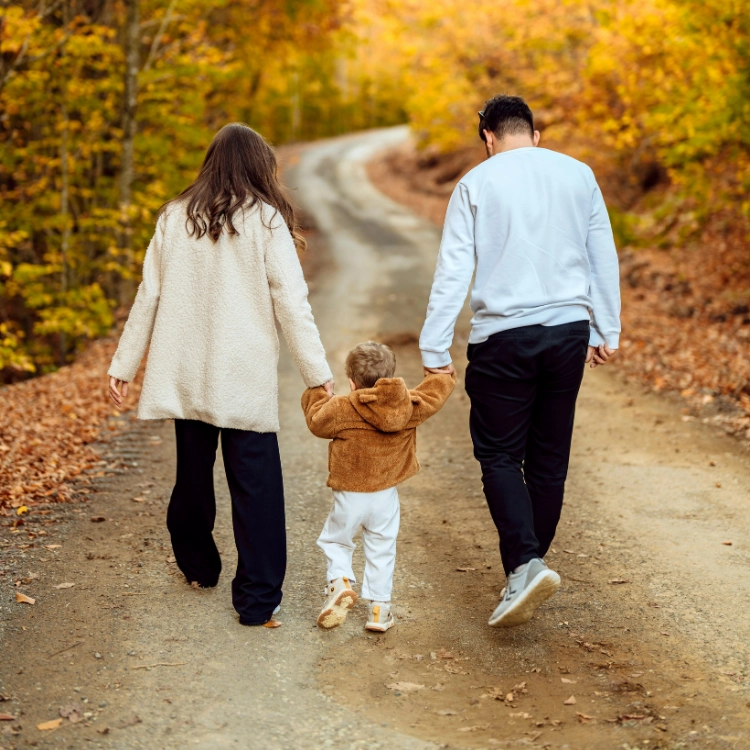
How to do it: Bundle up and head outside for 15 to 20 minutes – no destination required. As you walk, point out what’s changed since summer: bare branches, crunchy leaves underfoot, squirrels gathering acorns, the earlier sunset. Ask simple questions like “what color are most of the leaves now?” or “where do you think that squirrel is taking its food?”
If your child wants to collect a few leaves or acorns along the way, even better – you can use them later for a craft or just line them up on the windowsill at home.
Supports early scientific inquiry (observation, noticing patterns and change) under CT ELDS, plus gross motor development. NAEYC consistently emphasizes unstructured outdoor time as essential, not optional.
5. Blanket Fort Afternoon
Indoor cozy activity for shorter, colder days.
How to do it: Pile up couch cushions and drape a blanket or sheet over the backs of a couple of chairs to create a simple “fort.” Let your child take the lead on design – where the entrance goes, what goes inside, whether stuffed animals are allowed in. Add a flashlight and a favorite book or two, and let them settle in for some quiet reading or pretend play.
This one’s a great option for a rainy afternoon or when outdoor time feels a little too cold – a cozy change of scenery without leaving the living room.
Builds independence, imaginative play, and self-regulation – all CT ELDS social-emotional benchmarks. NAEYC notes that child-directed play (kids designing their own “space”) builds confidence and decision-making.
6. Handprint Turkey Craft
The classic – always a hit.
How to do it: Trace your child’s hand onto brown or tan construction paper (little ones often need help holding still and spreading their fingers). Once cut out, the thumb becomes the turkey’s head and the fingers become the feathers – add googly eyes, an orange beak, and let your child color in the feathers with markers, paint, or craft supplies you already have on hand.
It only takes a few minutes, but it makes a proud little keepsake to display on the fridge or bring to Thanksgiving dinner.
Simple fine motor practice (holding, tracing, coloring) tied to CT ELDS physical development goals, plus early creative arts expression, which NAEYC identifies as a distinct developmental domain in its own right.
None of these activities require a trip to the store or a Pinterest-worthy setup. They’re just small, warm moments – the kind that build connection, spark conversation, and quietly support the same skills we’re building in the classroom every day.
Sometimes the best family activities really are the simplest ones. Bundle up, grab some paper and glue, and enjoy the season.