Cold & Flu Season: Understanding Our Children’s Illness Policy
What to Know as We Head Into Winter
By Lisa Chaplinsky
As temperatures drop and children spend more time indoors together, cold and flu season becomes an unavoidable part of life in any group childcare setting. It’s one of the most common questions we hear from families this time of year: “Is my child too sick for school today?”
The good news is that our illness policy isn’t guesswork – it’s a clear, consistent set of guidelines designed to protect your child’s health, their classmates’ health, and our staff’s health, all while keeping our classrooms open and running smoothly for the families who depend on us.
Here’s a plain language look at how our policy works, and what you can expect from us this season.
When We Ask a Child to Stay Home
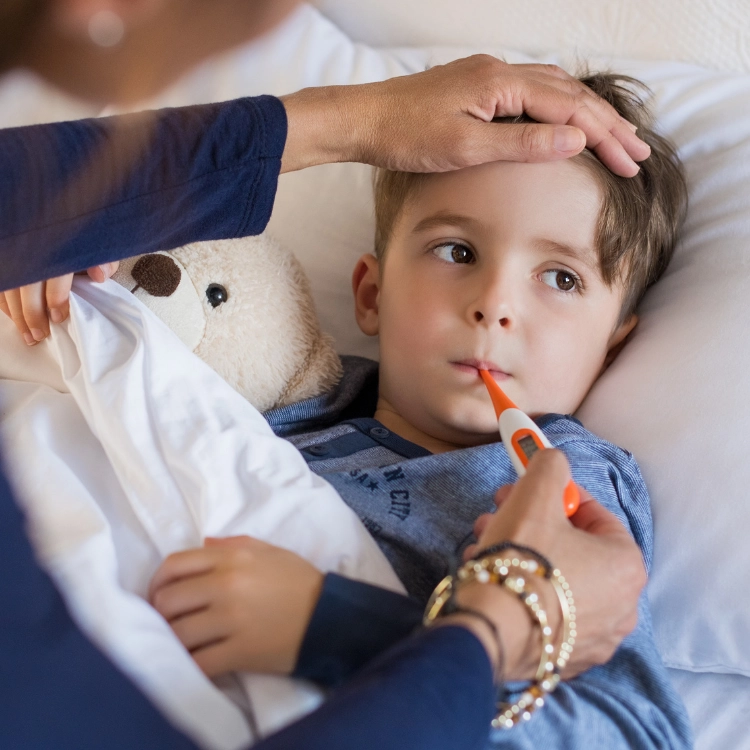
Some illnesses are simply part of life in a classroom community – but certain symptoms mean a child needs to stay home to recover and to avoid spreading illness to others. We ask families to keep a child home if they’re experiencing:
- A fever over 100.4°F
- Vomiting or diarrhea
- Sore throat with fever (possible strep)
- Pink eye (conjunctivitis)
- An undiagnosed rash
- Mouth sores or excessive drooling
- Any symptom that would prevent a child from fully participating in the day, including outdoor play
We know this list can feel like a lot, but it’s built around one simple idea: a child who isn’t well enough to be outside and playing isn’t well enough to be at school that day.
The 24-Hour Rule
One of the questions we get most often is when a child can return after being sick. Our guideline is straightforward: children must be symptom-free, and fever-free, without the help of medication like acetaminophen or ibuprofen, for a full 24 hours before returning.
This isn’t about being strict for the sake of it. It’s about giving a child’s body the time it needs to recover and reducing the chance that other children (and teachers) catch the same illness right behind them.
What Happens If a Child Gets Sick at Our Center
If your child becomes ill while in our care, we’ll contact you or your alternate pick-up person right away, and we ask that arrangements be made for pick-up within one hour. This quick turnaround helps your child get the comfort of home sooner and helps limit exposure for the rest of the classroom.
How to Notify Us
If your child will be out sick, please let us know as early as possible by phone or through our parent communication app. Prompt notification helps our teachers plan staffing and classroom activities for the day – and it’s genuinely appreciated.
A Few Ways Families Can Help This Season
- Wash hands when entering and leaving your child’s classroom. This is one of the simplest and most effective habits a family can build this season – germs travel on hands more than almost anywhere else, and a quick wash at drop-off and pick-up helps protect every child in the room, not just your own.
- Keep vaccinations current. Connecticut requires an annual flu vaccine as part of each child’s Health Assessment Record – a good reminder to schedule that appointment early in the season.
- Practice handwashing at home. The same habit we reinforce in the classroom (before meals, after using the bathroom, after coughing or sneezing) makes a real difference when practiced consistently at home too.
- Teach cough and sneeze etiquette. Coughing or sneezing into an elbow instead of hands is a small habit that goes a long way toward limiting how quickly illness spreads through a classroom.
- Have a backup care plan. Cold and flu season is unpredictable and having a plan in place for a sick day, a family member, a flexible work arrangement, takes some of the stress out of an already tiring day.
Why We Hold This Line
Our illness policy is built on Connecticut’s childcare licensing standards and reflects best practices for group care settings. It isn’t designed to be inconvenient – it’s designed to protect every child and every teacher in our community, including yours. We know a sick day can be disruptive for a family’s schedule, and we don’t take that lightly. But keeping our classrooms healthy is one of the most important ways we care for every child at Town & Country.
If you ever have questions about a specific symptom or situation, your director is always happy to talk it through with you.