Fire Prevention Week: Teaching Fire Safety to Young Children
Recognizing National Fire Prevention Week, October 4–10
Every October, Fire Prevention Week gives schools, childcare programs, and families a shared reason to revisit fire safety, one of the longest-running public health observances in the country. This year’s national theme, set by the National Fire Protection Association (NFPA), is “Charge Into Fire Safety: Safe Charging Is a Superpower,” focused on the safe charging, storage, and use of lithium-ion battery devices like phones, tablets, e-bikes, and scooters.
While that theme is aimed largely at households, Fire Prevention Week is also a great moment for us to talk about how we teach fire safety to the youngest learners in our care – and how families can reinforce those same lessons at home.
How We Teach Fire Safety in the Classroom
Fire safety concepts for preschoolers look different than they do for adults. Our goal isn’t to alarm children – it’s to build calm, practical habits they can rely on, through the same play-based, developmentally appropriate approach we use for every other skill.
- Practiced fire drills. As part of our licensed emergency procedures, children practice fire drills routinely, so lining up and walking calmly outside feels familiar rather than frightening.
- “Firefighters are helpers.” We talk about firefighters as trusted helpers, not scary figures – an important distinction for young children who may otherwise associate sirens and uniforms with fear.
- Stop, Drop, and Roll. A simple, memorable physical routine that children can practice like a game, building both the motor skill and the muscle memory.
- Knowing the meeting spot. Children learn that during a drill (or a real event), there’s always a specific place to go and a specific adult to find – reinforcing security and predictability.
These lessons connect directly to the social-emotional and self-regulation domains in Connecticut’s Early Learning and Development Standards (CT ELDS 2025) and reflect NAEYC’s guidance that safety education for young children should be hands-on, age-appropriate, and free of unnecessary fear.
What Families Can Reinforce at Home
Fire Prevention Week is a good nudge for families to revisit a few basics too:
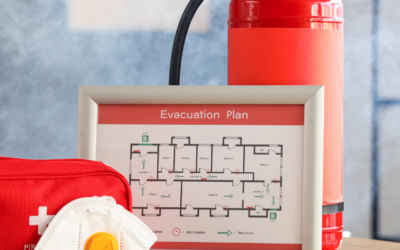
- Practice your home escape plan. Pick a meeting spot outside and walk through it with your child, the same way we practice at school.
- Let your child meet a smoke alarm. Show them what it sounds like (at a safe volume) so it’s familiar, not frightening, if they ever hear it for real.
- Practice Stop, Drop, and Roll together. It’s a quick, low-pressure game at home that reinforces what we practice in the classroom.
- Follow this year’s NFPA theme at home. Charge phones, tablets, and other battery-powered devices on hard, flat surfaces away from beds and couches, use the charger that came with the device, and unplug once charging is complete – especially relevant for households with e-bikes, scooters, or other lithium-ion devices.
Why This Matters
Fire safety, like all of our emergency preparedness at Town & Country Early Learning Centers, is built on Connecticut’s childcare licensing requirements set by the Office of Early Childhood (OEC), informed by NAEYC’s standards for the field, and practiced consistently so it becomes second nature – for staff and children alike. Fire Prevention Week is simply a good annual reminder to keep those habits sharp, at school and at home.
If you have questions about fire safety procedures at your child’s specific location, your director is always happy to walk through them with you.
By Lisa Chaplinsky, Town & Country Early Learning Centers