
How We Keep Your Child Safe: Childcare Emergency Procedures & Preparedness
Recognizing National Preparedness Month – Child Care Safety at Town & Country Early Learning Centers
Every September, National Preparedness Month asks families and organizations across the country to pause and ask one question: if something went wrong, would we know exactly what to do?
At Town & Country Early Learning Centers, that question isn’t hypothetical. Childcare safety and emergency preparedness shape how we train our staff, design our classrooms, and communicate with families every single day. Safety isn’t a binder that sits on a shelf – it’s a set of habits our teams practice, review, and refine, at all three of our licensed early learning centers in Southington, Middletown, and Colchester, Connecticut.
Here’s an inside look at our daycare emergency procedures, and why that preparation matters for your child.
It Starts With Licensing – But It Doesn’t End There
Every T&C classroom operates under a license issued by the Connecticut Office of Early Childhood (OEC), the state agency responsible for setting and enforcing childcare health and safety standards in Connecticut. As part of that licensing, Connecticut regulations require every childcare program to maintain a written emergency plan, and staff must complete training in emergency preparedness and response as part of their required health and safety coursework.
That’s the floor – the minimum every licensed childcare center in the state must meet. We treat it as a starting point, not a finish line.
What Emergency Preparedness Actually Looks Like at T&C
Behind the scenes, our childcare emergency planning covers several layers, including:
- Practiced drills. Fire drills, severe weather drills, and lockdown procedures are practiced routinely and on a rotating schedule, so that responding calmly becomes second nature for staff – not something they’re reading off a page for the first time in a real event.
- Clear roles. Every staff member knows their specific responsibility during an emergency, whether that’s accounting for children, managing communication, or coordinating with first responders.
- Family communication systems. Parents are notified promptly through our established communication channels, so you’re never left wondering what’s happening or where to go.
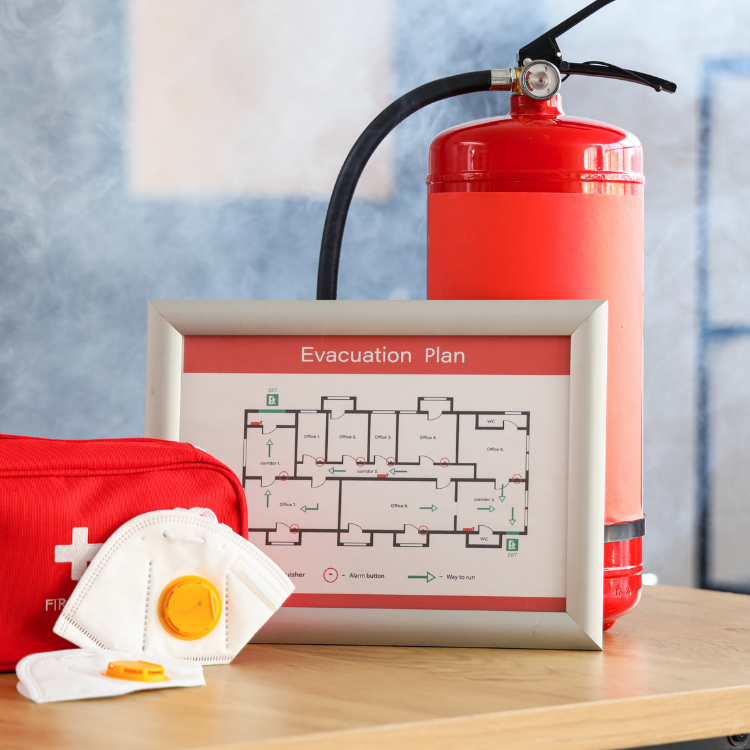
- Location-specific plans. Our Southington, Middletown, and Colchester locations each have building-specific evacuation routes, shelter-in-place locations, and emergency contact protocols tailored to their space.
- Ongoing review. Plans are revisited and updated, not written once and forgotten – reflecting current guidance from the state and best practices in early childhood education.
Why We Look to NAEYC, Too
Beyond state childcare licensing, we hold ourselves to standards set by the National Association for the Education of Young Children (NAEYC), widely regarded as the most rigorous accrediting body in early childhood education. NAEYC’s program standards address emergency preparedness directly, expecting accredited childcare programs to maintain clear health and safety policies and to give children age-appropriate opportunities to understand and practice safety procedures themselves.
That last part matters. Keeping kids safe isn’t only about what adults do in a crisis – it’s also about helping children build a calm, confident understanding of what to do if a drill (or a real event) happens. A fire drill isn’t just a compliance checkbox; it’s a chance for a three-year-old to practice lining up, staying with their teacher, and walking calmly outside – a skill they carry with them well beyond our preschool classrooms.
What You Can Do at Home
National Preparedness Month is a great nudge to have age-appropriate safety conversations at home, too:
- Practice a simple home fire drill together
- Make sure your child knows a trusted adult’s phone number
- Talk through what to do if you ever get separated in a public place
- Keep your emergency contacts and authorized pick-up list updated with your childcare center – this is one of the simplest, most important things a family can do
Our Commitment to Child Care Safety
Safety is never something we consider “handled.” Our emergency procedures are built on Connecticut’s childcare licensing requirements, informed by NAEYC’s standards for the field, and shaped by the daily judgment of the directors and teachers who know your child. When you enroll your child in one of our early learning centers, you’re trusting us with the most important part of your life – and we don’t take that lightly.
If you ever have questions about our emergency procedures at your child’s specific location in Southington, Middletown, or Colchester, your director is always happy to walk through them with you.
Your child’s safety is the foundation everything else at Town & Country Early Learning Centers is built on.
By Lisa Chaplinsky, Town & Country Early Learning Centers
Sources: Connecticut Office of Early Childhood (ctoec.org); National Association for the Education of Young Children (naeyc.org)