More Than Just Crafts: How Process Art Supports Learning in March
As March arrives, classrooms begin to shift. Children notice brighter light, changing weather, and new materials appearing in their environment. This time of year naturally invites creativity- and in high-quality early childhood programs, art becomes much more than a seasonal craft. It becomes a powerful way for children to think, explore, and express themselves.
At Town & Country Early Learning Center, March art experiences are intentionally designed as process art rather than product-focused crafts. This approach aligns with best practices outlined by the National Association for the Education of Young Children (NAEYC) and the Connecticut Early Learning and Development Standards (CT ELDS), both of which emphasize child-led exploration, developmentally appropriate practice, and learning through play.
What Is Process Art?
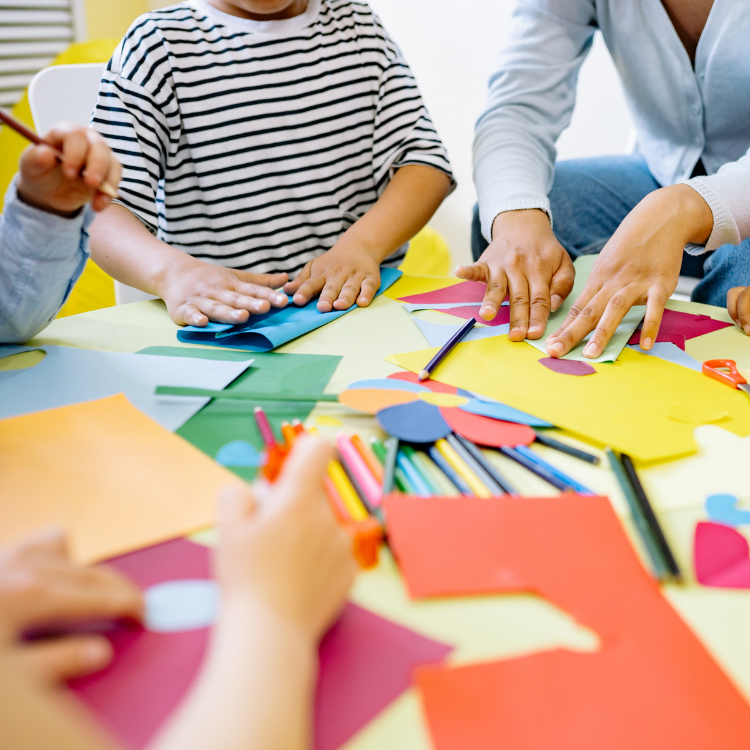
Process art focuses on the experience of creating rather than the finished product. Children are given open-ended materials and the freedom to explore, experiment, and make choices. There is no “right” way for the artwork to look. Instead, the value lies in what children are doing, thinking, and learning along the way.
NAEYC’s Developmentally Appropriate Practice framework explains that young children learn best when they are actively engaged, making decisions, and expressing ideas that are meaningful to them. Open-ended art experiences support autonomy, creativity, and deeper learning far more effectively than identical, adult-directed projects (NAEYC, 2020).
What Children Are Learning Through March Art Experiences
While art may look playful and simple, it supports multiple developmental domains outlined in the CT ELDS.
- Social & Emotional Development:
Children build confidence and a sense of identity as they make choices and see their ideas respected. Art also provides a safe outlet for expressing emotions- especially during a season of transition. - Physical Development & Health:
Tearing paper, squeezing glue, painting, and manipulating tools strengthen fine motor skills and hand-eye coordination, which are foundational for later writing and self-help skills (CT ELDS, Physical Development domain). - Cognitive Development:
Through experimenting with materials, children explore cause and effect, patterns, and problem-solving. These experiences support early math, science, and executive functioning skills (Head Start ECLKC, 2022). - Language & Communication:
Talking about artwork, explaining ideas, and listening to peers builds expressive and receptive language. Teachers support this by asking open-ended questions and encouraging descriptive language, as recommended by NAEYC.
What This Looks Like in Our Classrooms
During March, art experiences at Town & Country are intentionally open-ended. Teachers observe, document, and scaffold learning rather than directing outcomes. This reflects NAEYC guidance that assessment in early childhood should be based on authentic observation of children at work, not identical products or comparisons.
Art materials are thoughtfully selected to invite exploration, collaboration, and creativity, ensuring alignment with CT ELDS expectations across multiple domains.
March Process Art & Craft Ideas We Explore
Below are examples of process-based art experiences that support learning while still feeling seasonal and fun. Each child’s work looks different- and that’s exactly the goal.
Nature-Inspired Art
- Leaf, bark, or stone rubbings
- Painting with sticks, pinecones, or grass
- Spring collages using natural materials collected outdoors
Supports: sensory exploration, observation skills, fine motor development
Aligned with: CT ELDS Cognitive & Physical Development
Recycled Materials Creations
- Cardboard sculptures using boxes and tubes
- Bottle-cap mosaics and loose-parts designs
- Building and decorating “inventions” from recyclables
Supports: problem-solving, creativity, spatial reasoning
Aligned with: CT ELDS Cognitive Development & Approaches to Learning
Sensory & Texture Art
- Sponge or feather painting
- Painting with mud or sand mixed with water
- Drawing in shaving cream or damp sand
Supports: sensory regulation, emotional expression, language development
Aligned with: CT ELDS Social-Emotional & Physical Development
Weather-Inspired Art
- Rain painting (paper outdoors during a light drizzle)
- Wind painting using straws or fans
- Abstract “What does spring feel like?” paintings
Supports: observation, creative thinking, emotional awareness
Aligned with: CT ELDS Science & Creative Expression
How Families Can Try This at Home
Families don’t need special supplies or artistic skills to support process art at home. Simple, low-pressure experiences are often the most meaningful.
Easy ways to support art at home:
- Save recyclables like boxes, tubes, and scrap paper
- Offer just a few materials at a time to avoid overwhelm
- Let your child lead- avoid correcting or “fixing” their work
- Ask open-ended questions:
- “Tell me about what you made.”
- “What did you try first?”
- Focus on effort, exploration, and creativity- not the final product
The American Academy of Pediatrics emphasizes that play-based, creative experiences support children’s emotional regulation, problem-solving, and resilience- skills essential for lifelong learning (AAP, 2018).
Why This Matters
Art in early childhood is not about producing matching projects-it’s about supporting the whole child. Process art strengthens foundational skills across all developmental domains while honoring children’s individuality, curiosity, and voice.
By aligning art experiences with NAEYC best practices and the Connecticut Early Learning and Development Standards, Town & Country ensures that every paint stroke, collage, and creative choice is part of an intentional, meaningful learning journey.
This March, we celebrate children not for what their art looks like, but for what it represents: confident, capable learners growing through creativity.
References
- National Association for the Education of Young Children. (2020). Developmentally appropriate practice in early childhood programs.
https://www.naeyc.org/resources/position-statements/dap - Connecticut Office of Early Childhood. (2014). Connecticut Early Learning and Development Standards.
https://www.ctoec.org/early-learning-development-standards/ - Head Start Early Childhood Learning and Knowledge Center. (2022). The importance of play in early childhood.
https://headstart.gov/curriculum/article/importance-play-early-childhood - American Academy of Pediatrics. (2018). The power of play: A pediatric role in enhancing development in young children.
https://www.aap.org/en/patient-care/early-childhood/early-childhood-health-and-development/power-of-play/